OEM & Sourcing
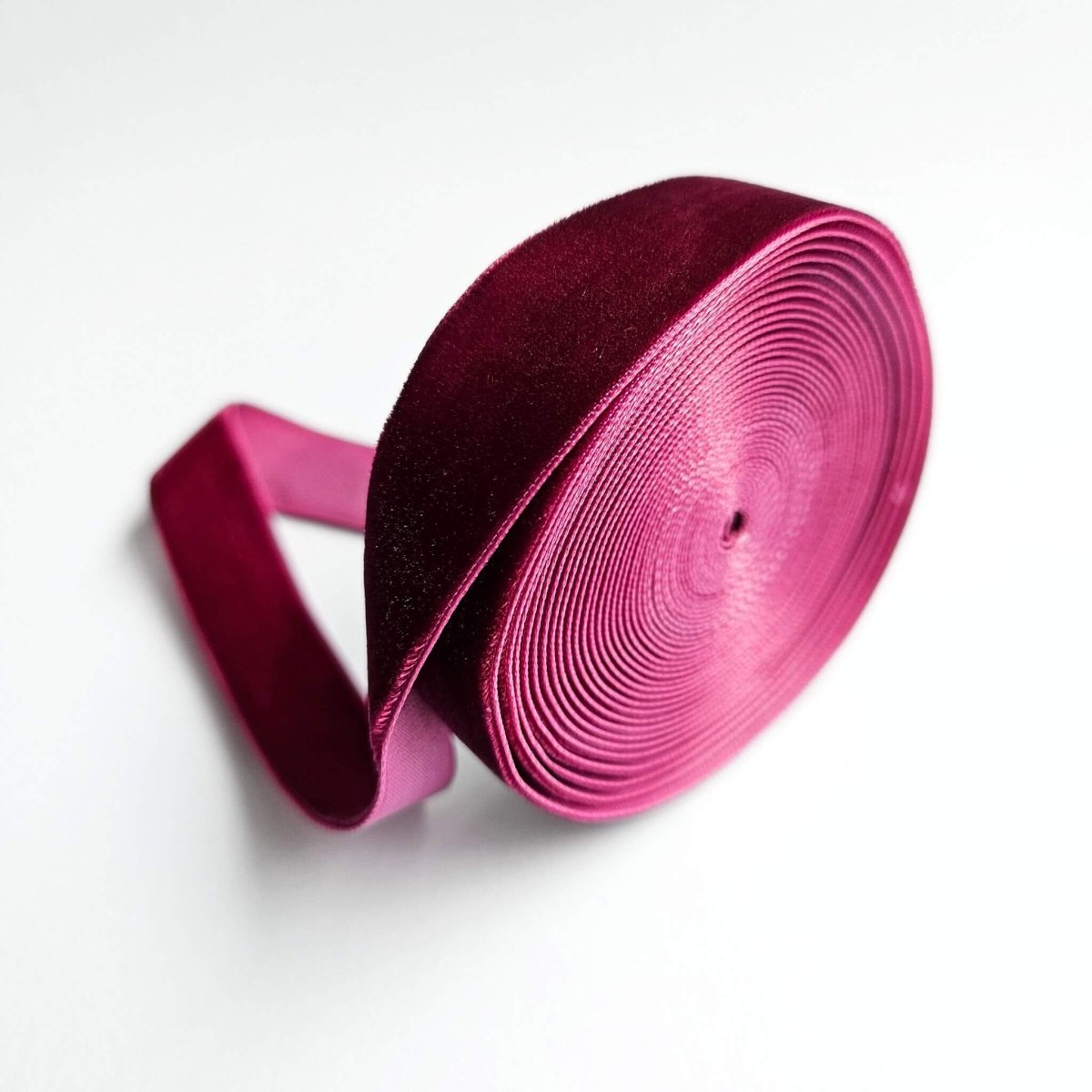
How to specify the roll, not just the ribbon: winding format, core size, roll length, selvage, and the nine lines to add to your purchase order.
2026-11-03 · 18 min read
November 3, 2026
How to control the economics of a custom ribbon trim set: structure the bill of materials, understand the four assembly states, specify packaging as a cost document, and find where margin actually leaks.
November 3, 2026
How to structure a private label ribbon agreement: specify the product with measurable tolerances, fix MOQ and price windows, protect artwork, tooling and colour recipes, and write exit terms before you need them.
November 3, 2026
How to read and improve a custom ribbon quotation: normalise scope, understand the cost structure, find the four levers that work, and build a landed cost model at three volumes.
November 3, 2026
How to verify a ribbon supplier before you commit: confirm identity and site, test capability against your brief, verify the quality system, check capacity and continuity, and build a supplier file.
November 3, 2026
How to verify ribbon supplier certifications: reading scopes, tracking expiry, requesting evidence beyond the certificate, and substantiating your own on-pack compliance claims.
November 3, 2026
A practical guide to running a private label ribbon programme: writing a buildable specification, capturing colour as a number, designing the sample ladder and securing the reorder.
November 2, 2026
A buyer's guide to ribbon minimum order quantities: what drives a minimum, how to get below it, reading quotations, and why landed cost really matters.
November 2, 2026
A guide to branding ribbon: comparing screen print, foil, heat transfer and jacquard, preparing artwork, matching Pantone colour and running the sample ladder.
November 1, 2026
Reducing supply risk in custom ribbon programmes: dual sourcing vs qualified alternation, specification portability, route independence, exercising an alternate, and continuity triggers.
November 1, 2026
A practical guide to ribbon and decorative trim certifications for brand owners and procurement teams. Explains the two categories of credential and why confusing them creates gaps, how to read OEKO-TEX Standard 100, FSC, BSCI, SMETA and ISO 9001 without over-reading them, why certificate expiry and silent scope changes are the biggest compliance risk, a step-by-step verification method using the issuing body's own database, how to match certification to your actual product risk, and how to build a compliance file that stands up to a retailer audit.
November 1, 2026
A step-by-step guide to sourcing custom ribbon and decorative trim from an OEM factory: choosing between OEM, ODM and private label models, writing a brief that gets comparable quotations, evaluating factory capability and capacity before price, running the sample ladder so you approve the right thing, the real development timeline from brief to delivery, purchase order clauses that prevent disputes, reorder planning, and where ribbon programmes most commonly go wrong.
November 1, 2026
A working cost model for buying ribbon and decorative trim, and why the quoted factory price is often less than half of the delivered cost. Covers all twelve landed cost components from ex-works value to internal conversion labour, how to read a factory's cost structure out of the quotation itself, where the money actually goes, how to compare two valid quotations on a normalised basis, and the cost-reduction levers that actually move the number.
November 1, 2026
A practical guide to structuring a private label ribbon and decorative trim programme as a repeatable supply programme rather than a series of purchase orders. Covers the four private label models, what a development brief must contain, how to run the sample ladder, how to build an approval gate schedule, reorder economics including MOQ exposure per SKU, packaging specification, the documentation set to fix before the first shipment, the programme metrics worth tracking, and where programmes usually come apart.
November 1, 2026
A structured method for choosing a ribbon supplier without defaulting to price. Covers building a shortlist of three to five factories, the four capability claims worth testing, a weighted scorecard with default weightings, how to negotiate on the levers you control, six supply agreement clauses that protect a private label programme, re-evaluation triggers, and seven red flags.
November 1, 2026
A buyer-facing guide to the three ways ribbon is bought: OEM manufacturing to your specification, ODM with factory design contribution, and private label as a commercial model. Covers the nine-stage OEM process, why two quotes differ by 30 percent, how MOQ and lead time are negotiated, what packaging specification must contain, the three private label cost numbers that matter, and a twelve-point pre-purchase-order checklist.
October 31, 2026
How to read and verify the certificates on your ribbon supplier's file rather than tick a box. Covers what a certificate actually proves, OEKO-TEX product classes, FSC chain of custody, what ISO 9001 does not prove, BSCI versus SMETA versus SEDEX, GRS transaction certificates, and a five-step verification routine.
October 31, 2026
A practical guide to writing a ribbon OEM development brief so quotations are comparable. Covers the 12 fields every brief needs, why two quotes for the same product differ by 30 percent, how to read factory responses, and the mistakes that cost buyers the most money.
September 28, 2026
A 211-module playbook covering the 5-capacity grid (loom / dye-house / finishing / QA / compliance), 4 split-order ratios (60-40 / 70-30 / 50-50 / 100-0), 4-tier safety-stock buffer architecture, 4-gate secondary-mill qualification protocol, and 4 activation triggers — built for global brand procurement teams designing 2027 multi-mill resilience programs.
September 28, 2026
Mill-Side Lot-to-Lot Color-Continuity Architecture 2026: Pantone FHI Dye-Recipe-Versioning & Inline-Spectrophotometry for Brand Procurement
A 212-module playbook covering the 6-variable cross-batch drift model, 7-stage dye-recipe versioning system, Pantone FHI hex equivalence decoder, 4-probe inline-spectrophotometry closed-loop architecture, 4-checkpoint color sign-off protocol, and 4-tier ΔE budget framework — built for global brand procurement teams designing 2027 color-stewardship programs.
September 18, 2026
Private Label Ribbon Launch Playbook: From Sampling to First Reorder — A 2026 B2B Procurement Guide for Brand Owners
A practical 7-stage playbook covering brief intake, sample turnaround, Pantone matching, MOQ negotiation, packaging design, and first-reorder ramp — based on 12 brand launches (38K–220K m/yr) we shipped from Xiamen in the last 18 months.
September 18, 2026
Ribbon Certification & Compliance Decoder: OEKO-TEX, REACH, CPSIA, Prop 65 and ESPR DPP Explained for B2B Ribbon Procurement (2026)
What each certification actually means for your ribbon program: which markets require which, how OEKO-TEX Standard 100 vs STEP maps to your product, when REACH SVHC declarations matter, and what ESPR Digital Product Passport will demand from 2027.
August 2, 2026
Ribbon OEM Cost Engineering & Should-Cost Modeling: Total Landed Cost Optimization Playbook
How to break a ribbon quote into 9 cost layers (yarn, dye, weave, finish, QC, packing, freight, duty, last-mile), find the 2–3 layers where negotiation actually moves the needle, and lock savings into a multi-year supplier agreement.
August 2, 2026
Ribbon OEM Certification Decoder & 12-Credential Supplier-Trust Playbook 2026
A 12-credential checklist for vetting a Chinese ribbon mill before you sign an MSA — covering OEKO-TEX, FSC, BSCI, SEDEX, SMETA, ISO 9001, ISO 14001, plus 5 financial and operational signals buyers usually miss.
August 2, 2026
Sustainable Ribbon & ESG-Certified Supply Chain: Recycled Material Sourcing Playbook
How RPET, GRS-certified recycled polyester, and bamboo-fiber ribbons actually perform vs virgin polyester — including tensile strength, color consistency, dye uptake, and 11–23% landed-cost impact across three real B2B programs.
August 1, 2026
Ribbon OEM 9-Stage Process Control: Sample-to-Shipment Lead-Time Decoder
From signed PO to ex-factory: the 9 stages inside a typical Xiamen ribbon order, average duration per stage, the 3 stages where delays actually happen, and how 500m trial orders compress to 11 days vs 26 days for first-time buyers.